Blog
There's always something fun happening at Parken Zoo. Go behind the scenes and see how the work is done.
The folk are back! Parken Zoo is bringing Eskilstuna's classic entertainment palace back to life
23 August 2026
There are places that are more than just a building. Places where generations have danced, laughed, met and created memories together. Folkan in Eskilstuna is such a place.
This autumn, Parken Zoo is reopening the doors to the classic entertainment palace and letting a new era begin. On the programme is dansband nights, dinner show with Wallmans and a Christmas buffet with show for both private individuals and businesses.
The initiative is part of Parken Zoo's ambition to broaden the experience and create more reasons to visit the park even outside the traditional summer season.
– With the Folkan, we are preserving a fantastic part of our history while creating something new. We want Parken Zoo to be a destination for experiences all year round, and here there is a unique opportunity to combine entertainment, food and community in an environment that already means a great deal to many, says Rickard Sjödén, CEO of Parken Zoo.
An entertainment palace with a unique history
Parken Zoo has its roots in Eskilstuna Folkets Park, which was inaugurated as early as 1898 and was one of Sweden's first public parks. Music, theatre and dance characterised the site long before animals became part of the operations.
Dancing had a special role right from the start. At the opening in 1898 there was a dance pavilion, and in 1931 a dedicated dance hall was built. After the building was destroyed in a fire in 1950, its successor was ready as early as the following year.
Folkan was opened in 1951. Ddescribed as Sweden's most modern dance pavilion.
Over the years, the venue has attracted both local residents of Eskilstuna and visitors from afar. Swedish artists, musicians and dance bands have succeeded one another on stage, and for many, Folkan is associated with evenings of dancing, music and celebration. That tradition is now to be continued.
Dancing returns to the Folkan
A natural first step is to let dance reclaim its place on the floor.
During the autumn, well-known Swedish dance bands like Micke Ahlgrens, Titanix and Streaplers the scene. An initiative that unites the nostalgia of classic Swedish community park evenings with a new generation of visitors.
But the dance nights are only part of the plans. The people's house is to be developed into a venue that can shift character depending on the occasion, from dance and dinner show for Christmas celebrations, corporate events and conferences.
– Folkan has a soul that cannot be built from scratch. Here, there are decades of entertainment history and memories. We want to preserve that, but also develop it. The aim is not to recreate what once was, but to let Folkan's history become the foundation for the next chapter, says Rickard Sjödén.
Wallmans – The World's Greatest dinner show
The Original Concept – Est. 1991
One of the autumn's major initiatives will be when Wallmans On Tour coming to Folkan – furthermore during a real anniversary year.
This year Wallmans is celebrating 35 years old. Since its launch in 1991 at Teatergatan 3 in Stockholm, the concept has evolved into full evenings where the restaurant experience merges with glamour, passion and top-class international entertainment.
The founder Hasse Wallman, together with Mikael Gordon-Solfors, currently CEO of Wallmans, and the then artistic director Peter Björk, created the groundbreaking concept and term dinner show – a fusion of food, music and magic where the guest is right at the centre of events.
Since the beginning over six million guests in three countries experienced Wallmans. Artists, singers and performers gets close to the audience and the boundary between stage, auditorium and restaurant is blurred.
When Wallmans On Tour now coming to Folkan are two entertainment traditions, each with a long history. Wallmans' 35-year dinner showconcept meets an entertainment palace that has gathered audiences around music and dance for generations.
Two strong traditions, a brand new experience right in the middle of Eskilstuna.
Christmas buffet and show, together they become the experience
As Christmas approaches, the People's House transforms once again. Then it is set for Christmas buffet with show, where the food and the entertainment together form the main event of the evening.
Here, the guest doesn't need to choose between a really great Christmas buffet and an evening of entertainment. The idea is that the two parts will reinforce each other.
A generous Christmas buffet featuring traditional Christmas flavours is combined with music, singing and a fast-paced show. The entertainment follows the guests throughout the evening, creating variety between the different courses of the Christmas buffet.
In other words, the show is not an addition to the Christmas buffet – the combination is the experience itself.
The warmth and flavours of the traditional Christmas buffet meet the energy of the stage, turning dinner into a whole evening where guests have time to eat, chat, laugh and be entertained together.
For businesses, this means a ready-made Christmas party where both dinner and entertainment are housed under the same roof For families, friends and other groups, the Christmas buffet show is another way to celebrate the start of Christmas – a whole evening where the flavours of Christmas are combined with a show and entertainment
The flavours of Christmas meet the energy of the stage – at Folkan, the Christmas buffet becomes a show and the show a part of the Christmas buffet.
New opportunities for businesses
Folkets' return simultaneously creates new opportunities for companies looking for something beyond the traditional conference room.
Featuring a restaurant, stage and capacity for larger groups, the venue can be used for conferences, company parties, client events, kick-offs and Christmas celebrations.
And here is an asset that cannot be ordered from a catalogue: character.
An event at Folkan takes place right in the middle of a piece of Eskilstuna's entertainment history. At the same time, the whole of Parken Zoo is just outside the doors, which makes it possible to combine meetings and conferences with activities, food, animals, entertainment and other experiences.
That way it becomes the whole park is an experiential arena, where the content can be tailored for everything from smaller groups to larger corporate events.
Back to our roots with an eye on the future
For many people today, Parken Zoo is synonymous with animals, a funfair, swimming and family experiences. But the park's history began with something else.
Here people gathered for music, theatre and dance long before the first animals arrived in the area in the early 1950s. Therefore, the investment in Folkan is not just a new operation. In many ways, it is a return to Parken Zoo's roots.
The difference is that the traditional folk park heritage now gets to meet today's ways of socialising and experiencing entertainment.
– Parken Zoo has a fantastic entertainment history that we are proud of and want to build upon. With Folkan, we can create experiences even outside the traditional park season and welcome both private individuals and businesses all year round. The combination of Folkan's history, really good food and top-class entertainment has enormous potential. This is the beginning of a new chapter for a classic part of Eskilstuna, says Rickard Sjödén.
When the lights are turned on, the food is served, and the music once again resounds through the hall, a story that began more than a century ago therefore continues.
But this time it's not about looking back.
It is about what happens next. The folk are back.
Step inside with the kangaroos – how our new walk-through works
23 August 2026
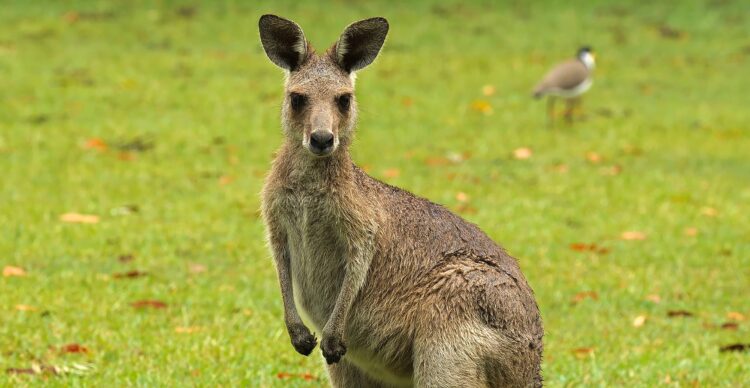
Have you ever dreamed of getting really close to a kangaroo? Now you can do it at Parken Zoo! In our new walk-throughenclosure for eastern grey kangaroos you get the opportunity to step into the kangaroos' area and experience the animals in a whole new way – on their terms.
An experience out of the ordinary
When you step in to the kangaroos, you leave the usual zoo path behind. Here, the eastern grey kangaroos move freely in the area and you get the opportunity to see them up close.
Maybe someone is lying resting in the grass. Another might hop past. Or you might meet a curious kangaroo that stops and looks at you.
It is precisely the unexpected that makes the experience special.
The animals set the pace
Even if you are inside the kangaroo enclosure, it is important to remember that they are their area. The kangaroos choose for themselves whether they want to come close or keep a little distance. Therefore, the experience can look completely different from visit to visit.
The best tip is simple: take it easy, keep your distance and let the kangaroos come to you. In this way, both the animals and the visitors are ensured a safe and positive experience.
Don't forget the camera!
Getting that close to the kangaroos naturally offers fantastic opportunities for photography. But sometimes it is actually better to put the phone away for a while and just look. See how the kangaroos move, how they socialise with each other and how they use their surroundings.
Another type of zoo experience
Walk-through-the concept is about creating a closer connection between humans and animals, while placing the animals' needs at the centre. For many visitors it becomes a chance to discover the kangaroos in a completely different way than before. And for children, it can become a memory they will talk about for a long time: ”I actually went inside with the kangaroos!”
Did you know this about the eastern grey kangaroo?
The eastern grey kangaroo is one of Australia's largest kangaroo species. Despite its size, it can move with impressive speed and power when hopping.
Kangaroos are also brilliant at adapting their movement to the terrain and use their powerful tail for support and balance when moving.
How to get the most out of your visit
Take it easy – walk slowly and avoid sudden movements.
2. Give the animals space – let the kangaroos decide for themselves how close they want to be.
Look and discover – study their behaviour and see how they socialise with each other.
4. Have the camera ready – but don't forget to also experience the moment without a screen.
5. Always follow our instructions – they are there for the safety of both the animals and the visitors.
Welcome in to see the kangaroos!
Whether it is your first time seeing a kangaroo up close or you are already a true kangaroo enthusiast, a different kind of experience awaits you at Parken Zoo.
Step inside, slow down and let the kangaroos show the way.
Endangered species of the month: The Amur leopard
23 August 2026
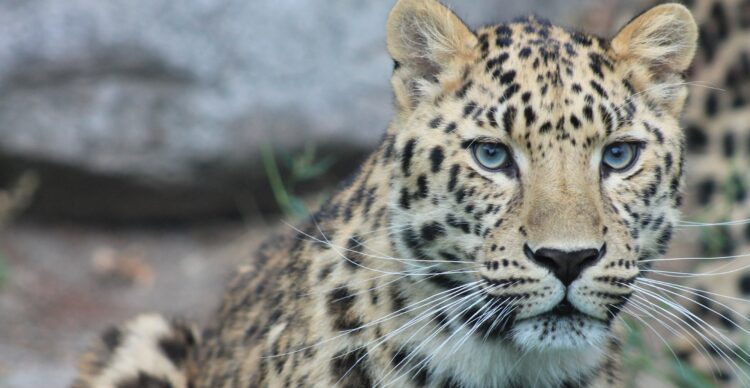
Elegant, agile and incredibly rare. The Amur leopard is one of the world's most endangered cat species, at Parken Zoo you can meet this fascinating leopard up close.
In nature, there are estimated to be only around100 Amur leopards kvar. Therefore, every individual is important for the future of the species.
A leopard for the cold climate
The Amur leopard lives in temperate mixed forests in southeastern Russia and the Amur region of China. Here winters can be cold, and the leopard's long and dense coat is a perfect adaptation to the climate.
It also differs from other leopards by its beautiful coat with large, rosette-shaped spots. Furthermore, the Amur leopard is a skilled climber and can take its prey up into the trees to eat undisturbed.
One of the world's most endangered felines
The Amur leopard is classified as under imminent threat, which means that the species is at an extremely high risk of extinction in the wild. One of the major challenges is that the leopard's habitat has decreased significantly. Deforestation and forest fires affect the areas where Amur leopard livers. The species has also been subjected to poaching.
When habitats disappear, it becomes harder for the leopards to find both shelter and food.
But there is hope
Despite the serious situation, there are positive signs. Atalent Amur leopards in the wild has increased somewhat in recent years and that reproduction in nature has also been observed. The increase is believed to be linked to various nature conservation and preservation efforts.
Here, zoos also play an important role.
Arken Zoo is participating in EEP – the European breeding programme for Amur leopard, where zoos collaborate to preserve a genetically healthy population and contribute to the species' long-term future.
Meet Amur leopard at Parken Zoo
Next time you visit Parken Zoo, stop by Amur leopard.
Look at the thick coat, the characteristic spots and the powerful paws. It can be easy to just see a beautiful leopard, but behind the fascinating exterior there is also an important story about conservation, hope and the fight to save a species from extinction.
By getting to know Amur leopard can we also understand why it is so important to protect the animals and habitats that remain.
Did you know that?
Threatened species of the month is a series where Parken Zoo highlights some of the species that need our help. Through knowledge, conservation and cooperation, we can together contribute to ensuring that endangered species have a future.
5 things you must not miss when visiting Parken Zoo this autumn
23 August 2026
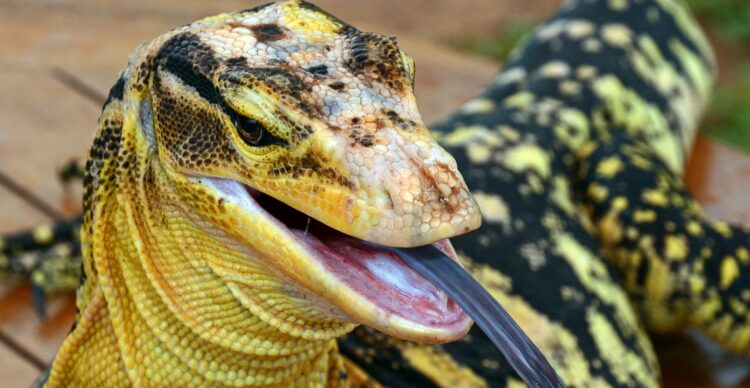
Autumn is a fantastic time to discover Parken Zoo! As the air becomes crisper and nature changes colour, exciting animal experiences await around every corner. Here we have gathered five things you cannot miss during your autumn visit.
Check out the beautiful water monitor
Drop by Amazonas and discover this fascinating reptiles up close. Do take the opportunity to stop for a while and see if you can spot them as they move about in their natural habitat. An exciting experience for young and old alike!
2. Say hello to our charming grey forester kangaroos
Don’t miss our charming giant grey kangaroos! Go for a walk through their territory and keep an eye out for these mighty animals. Perhaps you’ll see them resting, leaping or simply looking back at you with curiosity?
3. Take a photo with the owl family
At Parken Zoo, there are plenty of animals that might turn up where you least expect them. The Pågel familymoves freely throughout the park and may therefore prove to be an unexpected highlight of your visit.
Have your camera ready, Perhaps that’s exactly what it will be the owl family who gets to feature in today’s best photo!
4. Meet our beautiful zebras
The black and white zebras are a real favourite with many visitors. Take your time to stop at the savannah and admire their beautiful markings and fascinating behaviour.
Did you know that no two zebras have exactly the same stripe pattern? Just like our fingerprints, every pattern is unique.
5. Dare to face the Komodo dragon
Round off your tour with an encounter with one of the animal kingdom’s most fascinating reptiles, The Komodo dragon. This impressive species is the world’s largest living lizard and is truly an animal that makes an impression.
Welcome to an autumn day at Parken Zoo
Opening hours:
29-30 Aug 10.00-17.00
4-5 Sept 10.00-16.00
19-20 Sept 10.00-16.00
26-27 Sept 10.00-16.00
24-31 Oct 11.00-19.00
20 big news stories at Parken Zoo this summer!
7 July 2026
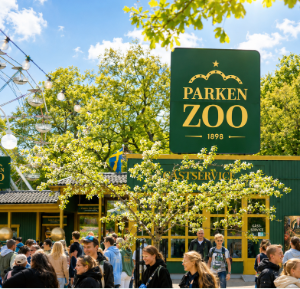
More is happening than ever at Parken Zoo. With new owners, major investments, and the biggest undertaking in many years, a summer full of completely new experiences awaits both young and old.
Several new animal species are moving in, four new rides are being opened, and the park is also offering brand-new ways to get up close to the animals. Whether or not you visited Parken Zoo last year, there’s plenty to discover this summer.
Here are this summer's biggest news:
🎢 Four brand new rides
The Tivoli has been expanded with four new attractions – and, just like before, all rides are included in the entrance ticket and season pass.
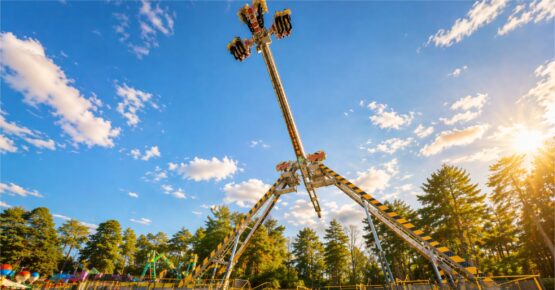
Top Spin – New!
A spectacular 25-metre-high ride where you spin 360 degrees and end up upside down several times. It will also be the only one of its kind in Scandinavia.
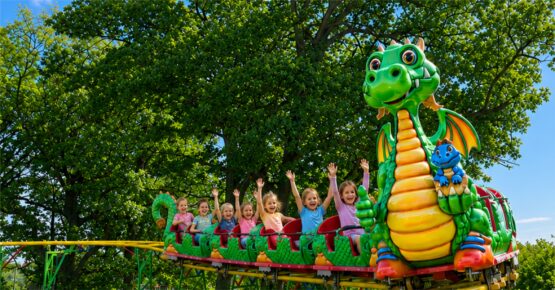
Dragon - News!
A brand-new family rollercoaster where the train sets off from the station and offers thrilling twists and turns for adventurers of all ages.
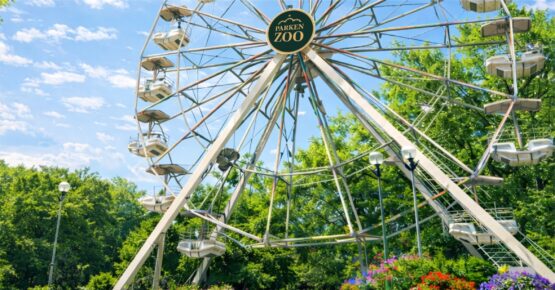
The Ferris Wheel – New!
The park's new landmark rises 22 metres above the entrance and offers fantastic views over both Parken Zoo and Eskilstuna.
The New Whirlwind – News!
A modern take on the classic favourite with more speed, more spins and even more thrills.

🐾 Meet over 15 new animal species
Over the past year, Parken Zoo has welcomed a wide range of new animal species from all over the world.
Among the news are:
- African wild dog
- Fishing cat
- River troll
- Geladabian
- Gotlandsruss
- Grant’s zebra
- Eastern grey kangaroo
- Guereza
- Golden-headed lion tamarin
- How
- Llama
- American alligator
- Peacock
- Struts
- Meerkat
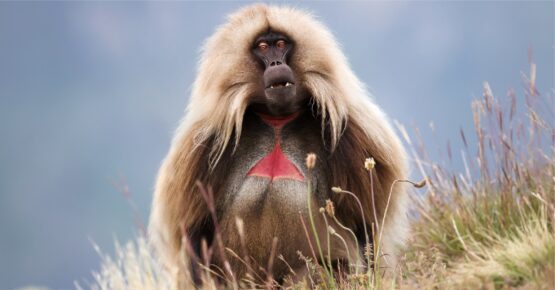
⭐ Several animals are unique to Sweden
Several of this year’s new arrivals are very rare and can only be found at Parken Zoo in Sweden.
Among the most unique species are:
- Gelada – the spectacular grass-eating baboon from the mountains of Ethiopia.
- Fishing cat – the skilled feline that hunts fish in the wetlands of Asia.
- Guereza – the black and white colobus monkey with its characteristic long white fur.
- Eastern grey kangaroo – One of Australia's largest kangaroos.
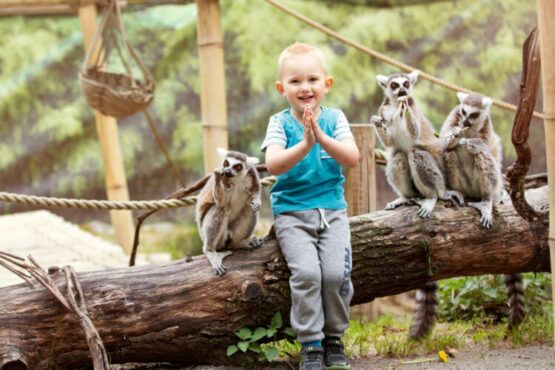
🚶 Step right in amongst the animals
This summer, you’ll get closer to the animals than ever before.
- check out our social media ring-tailed lemur
- stroll right in the middle of Grey giant kangaroos in their new walk-through facility
This offers a unique opportunity to experience the animals on their own terms – just a few metres away.
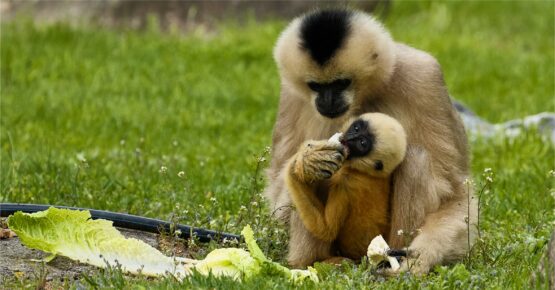
🍼 Newborn gibbon – a vital addition to a critically endangered species
One of the most heart-warming pieces of news this summer is the arrival of our newborn white-cheeked gibbon baby. The species is critically endangered and only found in three zoos in the Nordic region, making the birth an important contribution to international conservation efforts.
One of Sweden's largest zoos
Parken Zoo is home to many of the world’s most fascinating and endangered animal species. Here, you can experience, amongst other things:
- the Komodo dragon – the world’s largest lizard
- jaguar
- pygmy hippopotamus
- capybara
- alligators
- red pandas
- Sumatran tigers facing an acute risk of extinction
- and hundreds of other animals from all over the world.
Every day, there are also animal displays and feeding sessions where you can learn more about the animals and the park’s important work to conserve endangered species.
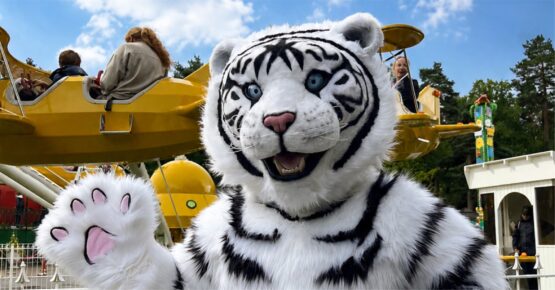
🐯 Meet Flurry – Parken Zoo's new discovery tiger
One of the summer's big news stories is Flurry – Parken Zoo's new white tiger. Flurry is a playful and curious character who will take young and old on voyages of discovery through the animal kingdom. At the same time, Flurry is a tribute to the white tigers that for many years were a symbol for Parken Zoo and Eskilstuna. Today, the critically endangered Sumatran tiger lives in the park instead – an important step in Parken Zoo's work to conserve endangered animal species.
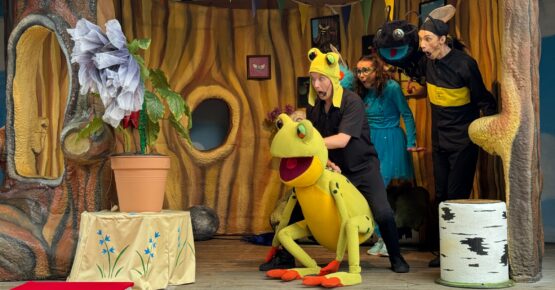
🐝 Two new performances with Humlan Djojj – every day until 9 August
This summer, Humlan Djojj presents two brand new children's shows, performed several times a day on the Humlan Djojj stage, right up until 9th August. Here, children will truly meet Djojj through music, stories, singing and interactive elements where the audience becomes part of the adventure. An appreciated experience for the youngest – and a definite stop during your day out in the park.
🎉 A brand-new Parken Zoo
Over the past few months, Parken Zoo has undergone a comprehensive transformation. With new owners and significant investments, the park has been developed with more experiences, more animals, more attractions, and an even greater focus on family experiences and conservation work.
In short, there have never been more reasons to visit Parken Zoo than this summer – this year's hottest destination.
Meet Parken Zoo's new white tiger – Flurry
3 July 2026
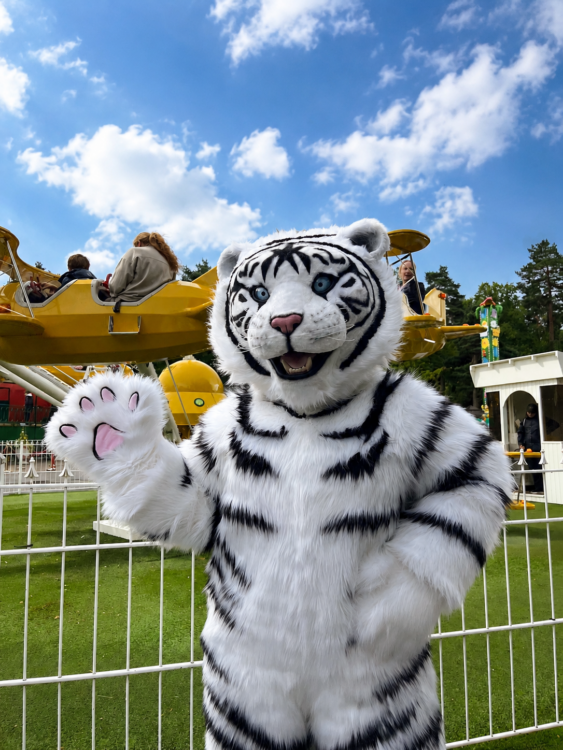
The white tiger was for a long time one of Parken Zoo's most beloved symbols. Now it's making a comeback – in a completely new guise.
Parken Zoo presents today Flurry, a curious and adventurous white tiger who will meet park visitors, spread joy, and take both children and adults on journeys of discovery through the animal kingdom.
Flurry loves exploring the park, meeting new animal friends, and learning exciting things about nature. Sometimes Flurry is a little mischievous, often brave, but always caring. The best thing Flurry knows is discovering the world together with the park's visitors.
Flurry is also a homage to Parken Zoo's history. For many years, the white tigers were a strong symbol for both Parken Zoo and Eskilstuna, creating memories for generations of Swedes. Today, instead, the critically endangered, yellow Sumatran tiger lives in the park – an important step in Parken Zoo's work to conserve endangered animal species.
Through Flurry, the white tigers gain a permanent place in Park Zoo's narrative. Flurry connects the park's history with its future, inspiring new generations to discover, learn, and care about the world's animals.
The white tigers hold a special place in many people's hearts and are an important part of Park Zoo's and Eskilstuna's history and identity. Flurry will be a symbol that unites generations and spreads curiosity and a sense of discovery, says Rickard Sjödén, CEO of Parken Zoo.
The folk are rising again! Dansband evenings are back at Parken Zoo
9 June 2026
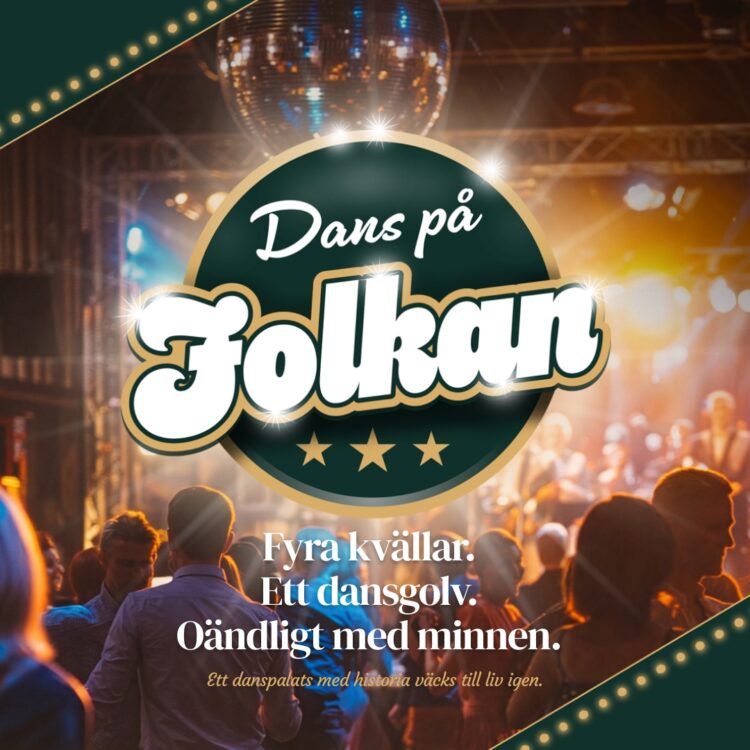
After several years of silence, the classic Folkan video Dadrken Zoo back to life. In late summer and autumn, four events will be organised inevening of live music marking a long-awaited return for one of Sweden's most historic entertainment venues.
The bet offers on a mix of nostalgia and the present day when some of Sweden's best-known inThe band Intar enters the stage. First up on August 1st is Lars-Kristers, followed by Micke Ahlgrens on 29 August and Titanix 26 September. Ends 7 November Streapsils series of inEvenings.
– This is an important investment for DadRken Zoo. Folkan holds a special place in many people's memories, and now we want to give both former and new visitors the chance to experience that atmosphere again, says Mattias Zingmark, marketing manager.
In addition to invisitors are offered the opportunity to book a special infood and drink in connection with the events. Tickets are sold both as inticket and in combination with a supper.
DadA man's zoo tripMumso that the return will attract both loyal inguests from all over the country and a new audience too Folkan and once again make the venue an obvious meeting point for music and in.
New roller coaster – Dragon!
3 June 2026
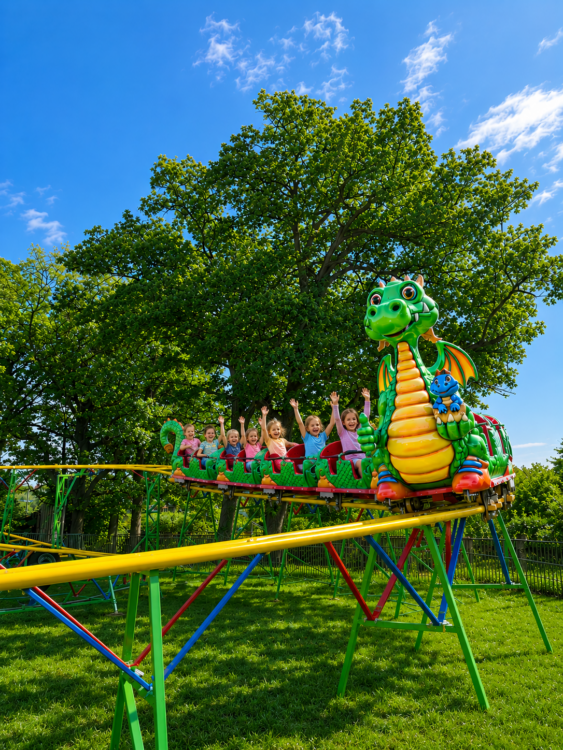
This summer, the funfair at Parken Zoo will be even bigger. To meet the record-breaking interest and give our guests even more experiences, we are now presenting Dragon – a brand new rollercoaster for children and families.
Dragon becomes the park's second roller coaster, offering a new type of ride experience at Parken Zoo. Instead of being slowly pulled up, the train is quickly propelled away right from the start, providing speed, thrills, and laughter from the very first second.
With its playful feel and rapid acceleration, Dragon is a modern cousin to our classic favourite the Mask – but with a completely unique experience and energy.
– We are very pleased to be able to present yet another new attraction for the summer. Dragon is perfect for families with children who want to experience speed and excitement together, and it will be a fantastic addition to our amusement park area, says Rickard Sjödén, CEO of Parken Zoo.
The new attraction is part of Parken Zoo's continued investment in developing the amusement park and creating more experiences for both new and returning guests.
This summer, thrilling adventures, laughter, and new memories await – and Dragon is ready to take its place as one of the park's major new attractions in 2026.
Parken Zoo launches fitness simulator cards.
29 May 2026
Nu ger Parken Zoo möjlighet för alla som vill motionssimma i sommar att komma in på Parkenbadet klockan 08.00 och simma till klockan 10.00 när Parken öppnar. This summer, Parken Zoo is offering everyone who wants to swim for fitness the opportunity to enter the Parkenbadet at 8:00 AM and swim until 10:00 AM when Parken opens.
"We've experienced high demand from the public in Eskilstuna to use Parkenbadet for lengths swimming. On days when Parken Zoo is open, we lack the capacity and opportunity, but have instead chosen to open the pool in the mornings for everyone who wants to swim lengths in peace and quiet. You can either use your season ticket or purchase a special lengths swimming card for the times between 08:00 and 10:00," says Rickard Sjödén, CEO of Parken Zoo.
If you want to swim and bathe during the day, you can buy an entrance ticket or season pass to Parken Zoo as usual.
Motion SIM card you buy by Click here.
Record interest in season tickets for 2026, biggest sale ever!
20 April 2026
For the 2026 season, interest in season tickets has broken all previous records. Almost 15,000 tickets sold make this the most successful sale in Parken Zoo's history.
The strong development is seen as a testament to the transformation the park is currently undergoing. Greater transparency regarding the vision for the future, combined with several new animal species that have moved in, has contributed to increased trust and engagement from visitors. At the same time, investments in new rides and a broad, attractive artist programme have further strengthened the overall experience.
– It feels fantastic to see the response. We have worked hard at being clear in our communication and showing where we are heading. That so many choose to join us on that journey means a great deal., says marketing manager Mattias Zingmark.
To meet the great interest and give more people the opportunity to take part in the offer, the campaign will be extended throughout April.
– We are both proud and very humbled by the immense interest. This is a testament to our guests believing in the direction we have set for the park and the development we are currently undertaking., says CEO Rickard Sjödén.
The season premieres on May 14th and is expected to offer a range of new features and experiences for both new and returning guests.