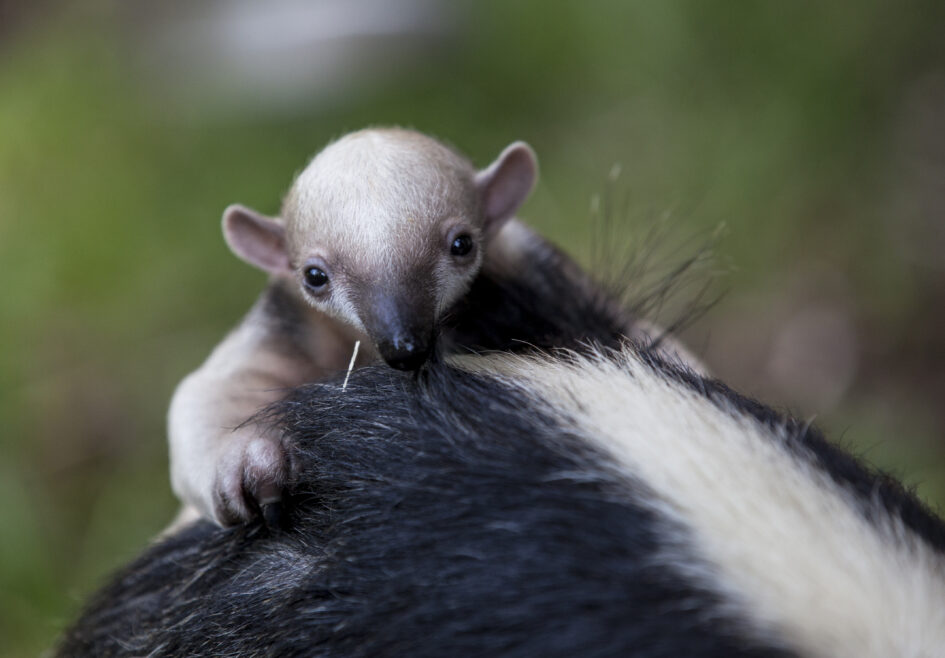
Southern tamandua
South American animals
The tamanduan is also known as the tree anteater and is a smaller relative of the giant anteater. It mainly lives in the trees but looks for
even food down on the ground. Tamanduan have no teeth but lick their food through their small mouths and then the food is crushed in their stomachs. They have very poor eyesight but their sense of smell is much better and helps the animals to find a tasty termite nest, for example.
The biggest threat to the tamandu today is poaching for meat or to make rope from the tamandu's tail. The zoo participates in the European breeding programme, EEP, for the conservation of the species.
The species is not listed under CITES.
The facts
| Scientific name | Tamandua tetradactyla |
| Size | 100-150 cm incl. tail |
| Weight | about 4.5 kg |
| Food | Insects, eggs and fruit |
| Gestation period | about 160 days |
| Number of cubs | 1 pc |
| Lifespan | about 9 years |
| Living environment | Rainforest and savannah |
| Distribution | South America |
| Way of life | People living alone |
Taxonomy
| Class | Mammals (Mammalia) |
| Organisation | Hairy molluscs (Pilosa) |
| Family | Anteaters (Myrmecophagidae) |
| Type | Southern tamandua (Tamandua tetradactyla) |