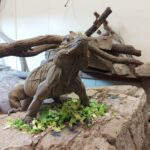
Rhinoceros Iguana
Reptiles
South American animals
The Rhinoceros Iguana gets its name from the nodules and growths it has on its nose. It loves warmth and needs many sunny spots to thrive. Males defend their territory and the most dominant male in the territory gets to mate with the most females. Females guard their eggs, but once the chicks hatch they fend for themselves.
The Rhinoceros Iguana is threatened mainly by habitat destruction due to deforestation. Parken Zoo participates in the European breeding programme to conserve the species.
The facts
| Scientific name | Cyclura cornuta |
| Size | 51-56 cm + tail |
| Weight | up to 10kg |
| Food | Leaves, flowers, seeds, insects and small mammals |
| Gestation period | Eggs are laid about 40 days after mating and hatch after about 85 days |
| Number of cubs | 5-30 per litter |
| Living environment | Dry forests, semi-deserts and rocky areas |
| Distribution | Dominican Republic, Haiti and Puerto Rico |