Great crested newt
Amphibian
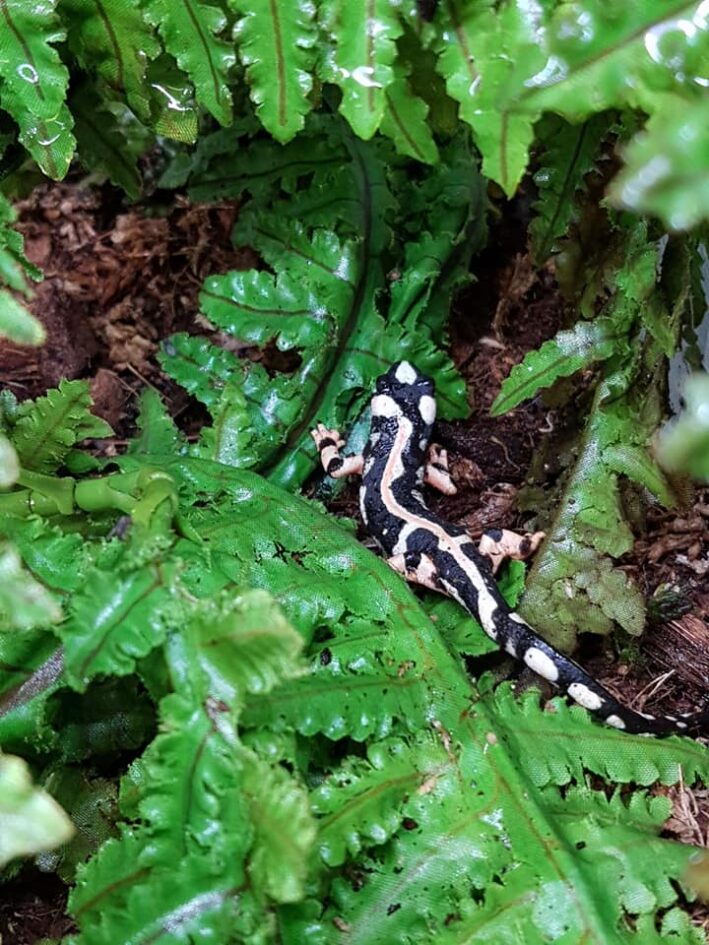
The Imperial Salamander is endemic to a few streams in the western part of the Zagros Mountains in Iran. This means it is the only place in the entire world where they are found in the wild. The Imperial Salamander lives in cold streams surrounded by mountains and forest. The females lay up to 60 eggs at a time, in a cluster on a rock or plant near the water. When the eggs hatch, it is larvae that develop into a salamander after 3-5 months. They become sexually mature after 2-4 years. The Imperial Salamander is currently classified as ”Vulnerable” by the IUCN Red List. This is mainly because their habitats are drying up and being destroyed, but also because humans catch them and keep them as pets. Park Zoo participates in the European breeding programme, EEP, for the conservation of the species.
The facts
| Scientific name | Neurergus kaiseri |
| Size | Length: 10-14 cm |
| Food | Insects, snails and small crustaceans |
| Number of cubs | Up to 60 eggs |
| Lifespan | 14 years |
| Living environment | Freshwater |
| Distribution | Iran |
Taxonomy
| Class | Amphibians (Amphibia) |
| Organisation | Starry amphibians (Urodela) |
| Family | Salamanders (Salamandridae) |
| Type | Emperor salamander (Neurergus kaiseri) |