How – Newcomer
Asian animals
Ungulates and hoofed animals
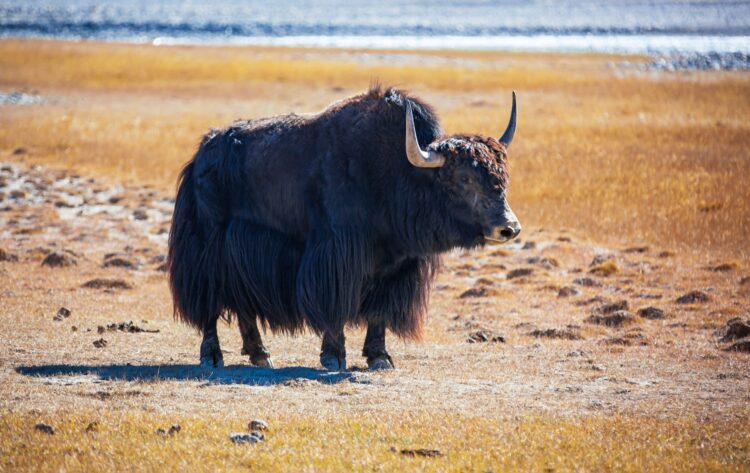
The yak is well-adapted to living a life at high altitudes (4000-6000 metres above sea level) where oxygen levels are low and the climate is challenging. This bovine animal has a robust body with powerful legs, compact hooves, and thick fur to cope with windy summers and cold winters. Yaks live together in large herds, sometimes with hundreds of individuals gathered in the same place. For the most part, yaks are peaceful, but males can become aggressive during the mating season. The herd mostly consists of females along with their offspring, but sometimes males may also be included. Males usually live in their own groups where they live together until it is mating season and time to challenge each other for the females. However, the composition of the herd can vary, for example, depending on the season, availability of food, and the appearance of the environment.
The yak is of great benefit to us humans. For example, yak milk is very rich and nutritious, and is used in the production of various dairy products. Its dung is also valuable. It is dried and used as fuel in areas where wood is scarce.
The wild yaks that remain primarily live in Tibet. A major threat to the wild yak is illegal hunting, as well as interbreeding with the domestic yak. Today, there are around 10,000 wild yaks left in the wild.
The facts
| Scientific name | Yak |
| Size | Height 120-150 cm |
| Weight | 250-700 kg |
| Food | Grass and plants |
| Gestation period | 8.5 months |
| Number of cubs | 1 |
| Lifespan | 20-25 years |
| Living environment | Grassland |
| Distribution | Central Asia |
| Way of life | Group living |
Taxonomy
| Class | Mammals (Mammalia) |
| Organisation | Paired ungulates (Artiodactyla) |
| Family | Bovidae |
| Type | Yak (Bos grunniens) |
