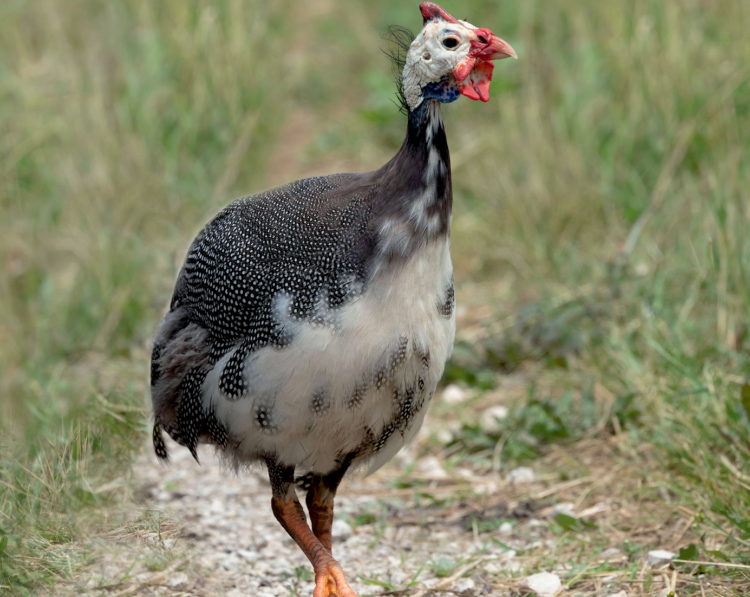
Helmeted guineafowl – Newly moved in
The helmeted guineafowl is an exciting bird originally native to sub-Saharan Africa. It is easily recognised by its dark plumage with numerous white spots and the characteristic ”helmet” on its head, which has given the species its name. In the wild, helmeted guineafowl live in flocks in open grasslands, savannahs and scrubby areas. They spend a lot of time on the ground looking for seeds, plants, insects and other small animals. Although they can fly, they usually prefer to run away if they feel threatened. Helmeted guineafowl are social birds that thrive in the company of their own kind. They communicate with each other through various calls and are often very alert to their surroundings. If danger approaches, the whole flock can quickly warn each other.
The facts
| Scientific name | Numida meleagris, Helmeted guineafowl |
| Size | 53-63 cm |
| Weight | 1-2 kg |
| Food | Omnivore |
| Gestation period | 30 days until hatching |
| Number of cubs | 10-20 |
| Lifespan | up to 15 years old |
| Living environment | Savanna |
| Distribution | Africa |
| Way of life | Group living |
Taxonomy
| Class | Birds (Aves) |
| Organisation | Galliforms |
| Family | Guineafowl (Numididae) |
| Type | Numida meleagris, Helmeted guineafowl |
