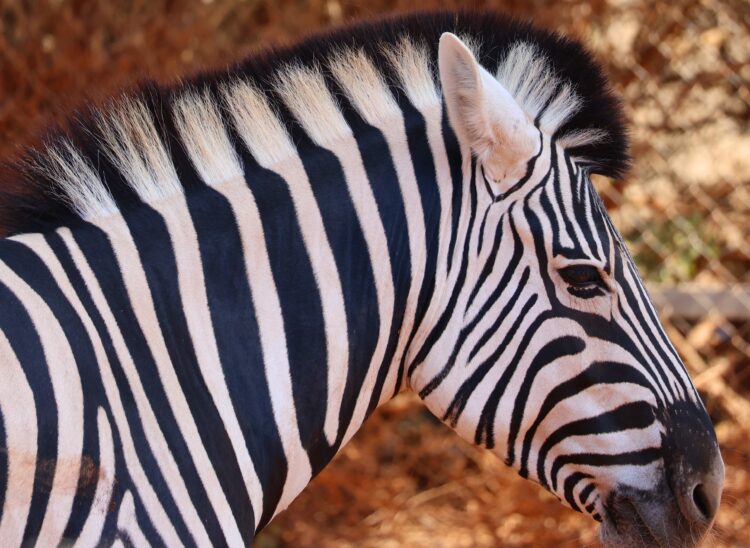
Grant's zebra - Newly arrived
Ungulates and hoofed animals
Grant's zebra, also known as Böhm's zebra, is one of the five subspecies of plains zebra – and the most numerous. On the vast savannas of Africa, particularly in Kenya and Tanzania, it roams open landscapes where the horizon seems endless and life is in constant motion. These zebras live in family groups, known as harems, where a stallion watches over his mares. As long as he succeeds in keeping rivals at bay, it is he who passes on the group's genes. After approximately one year of gestation, a foal is born, which stays close to its mother during its first months of life.
Zebras spend over 50% of their waking hours grazing on grass and often roll on the ground to cover themselves in dust and soil, which protects their skin from both the sun’s rays and insects. Sometimes several groups come together to form large herds – a fascinating interaction that is otherwise rare among ungulates. Together they graze, migrate and seek shelter in numbers. Their striped pattern is not only beautiful but also serves as a social code, helping zebras to recognise one another, strengthen their bonds through grooming and stay together on the open savannah.
The facts
| Scientific name | Plains zebra |
| Size | 110-145 cm at the shoulder |
| Weight | 175–385 kg |
| Food | grass, leaves, bark and other fibre-rich plants |
| Gestation period | 11-13 months |
| Number of cubs | 1 |
| Lifespan | Around 20 years |
| Living environment | Savannah and grasslands |
| Distribution | Zambia, Tanzania, Uganda, Kenya, Ethiopia |
| Way of life | gregarious |
