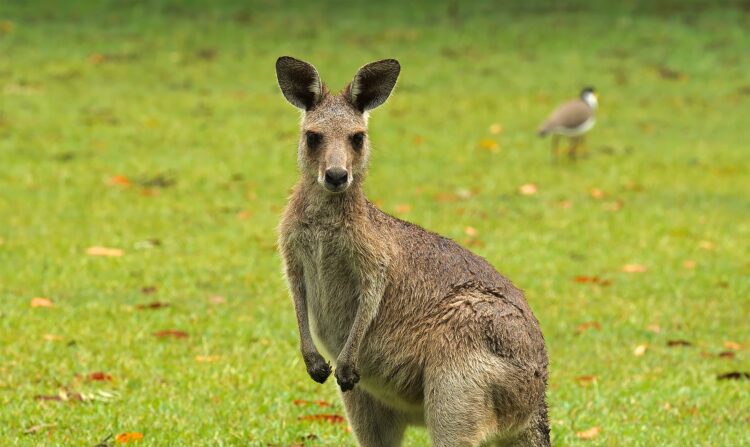
Grey Kangaroo - Newly moved in
Kangaroos belong to the marsupials – a group of mammals where the young develop in a pouch. Millions of years ago, marsupials were found across large parts of the world, but as the so-called placental mammals evolved, most marsupials were outcompeted. Today, almost all marsupials live in Australia and New Guinea, where isolation from other continents allowed them to survive and continue to evolve.
The Eastern Grey Kangaroo is one of the world's largest kangaroo species. When standing on its hind legs, it can reach over two metres in height and can leap up to 13.5 metres in a single bound. For short distances, it can achieve speeds of up to 65 km/h. Kangaroos often rest in the shade during the hottest hours of the day and emerge to graze from late afternoon until early morning. They live in mobs led by a dominant male. If a young male challenges the leader, a fierce fight can ensue, with the winner gaining the mob and the females.
Although the species is currently classified as viable, potential threats may arise in the future which could have devastating consequences for the species' survival. Park Zoo participates in the European Endangered Species Programme, EEP, for the conservation of the species.
The facts
| Scientific name | Eastern grey kangaroo |
| Size | 0.8-1.5 metres |
| Weight | up to 65 kg |
| Food | Grass and plants |
| Gestation period | 9 months |
| Number of cubs | 1 pc |
| Lifespan | 15-12 years |
| Living environment | Forest, savanna and grasslands |
| Distribution | Australia |
| Way of life | Group living |
Taxonomy
| Class | Mammalia (Mammals) |
| Organisation | Diprotodont marsupials (Diprotodontia) |
| Family | Kangaroo family (Macropodidae) |
| Type | Eastern Grey Kangaroo |
