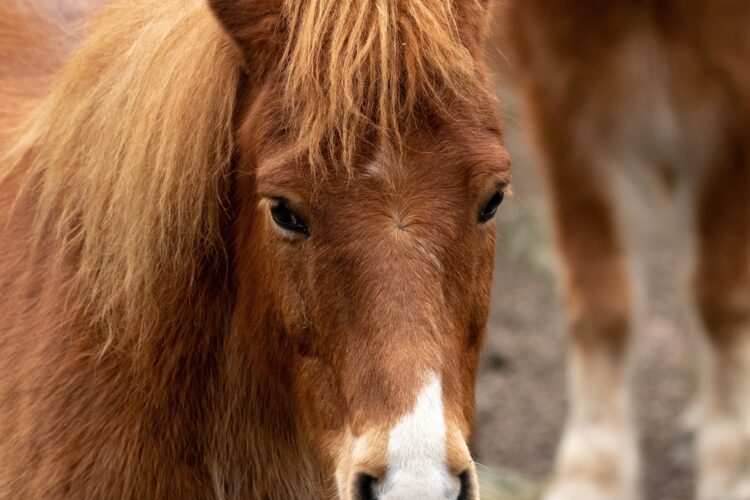
Gotlandsruss – Newly Moved In
The Gotland Russ is one of Sweden's oldest pony breeds and has been present in Gotland since the Stone Age. Even today, semi-wild Russ ponies still live on the island, and about fifty animals roam freely across a large nature reserve at Lojsta Hed. This is a strong and hardy pony with impressive resistance to diseases. The Gotland Russ is also known for its good temperament and curiosity, which makes it both easy to train and pleasant to work with. The breed occurs in many colours, from bay and black to more unusual variations such as palomino and pinto.
In the past, the Gotland Russ was primarily used as a draft animal in agriculture, but today it is a valued riding pony thanks to its stable and friendly temperament. During the 19th century, humans converted woodlands into farmland, and the natural pastures for the Gotland Russ disappeared, resulting in a drastic decline in numbers. Today, there are approximately 6,000 Gotland Russes, and the breed is no longer endangered, but work continues to preserve its unique characteristics.
The facts
| Scientific name | Equus caballus |
| Size | Shoulder height approx. 115–130 cm |
| Weight | around 400kg |
| Food | Plants |
| Gestation period | 11 months |
| Number of cubs | 1 pc |
| Lifespan | around 20-25 years old |
| Living environment | Woodland |
| Distribution | Gotland |
| Way of life | Flock |
Taxonomy
| Class | Mammals (Mammalia) |
| Organisation | Ungulates (Perissodactyla) |
| Family | Equidae |
| Type | Gotlandsruss (Equus caballus) |
