Gelada – New Arrival
African animals
Monkeys and lemurs
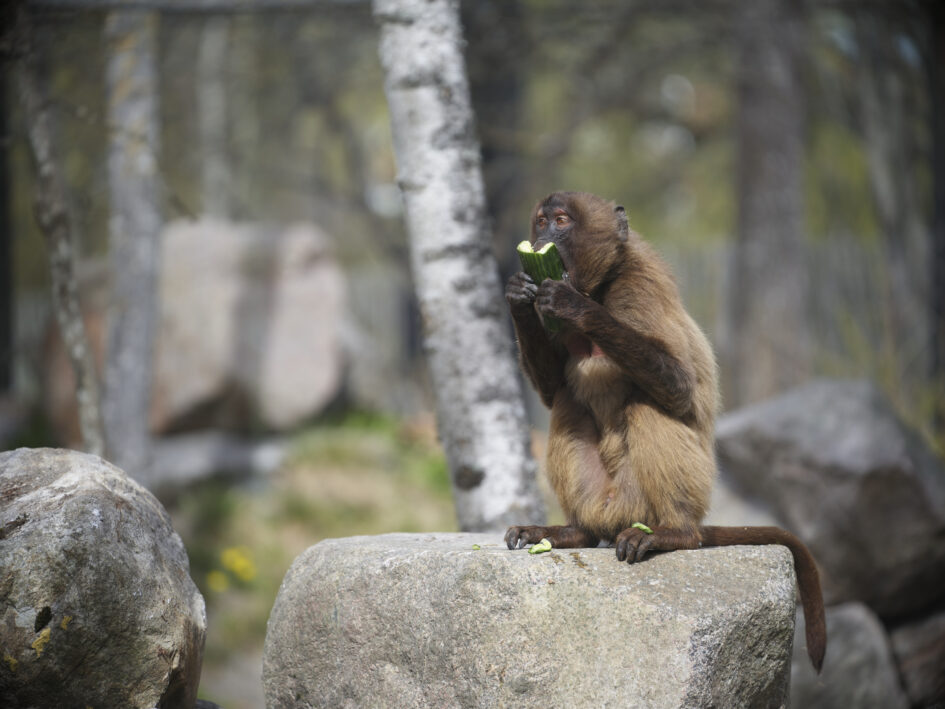
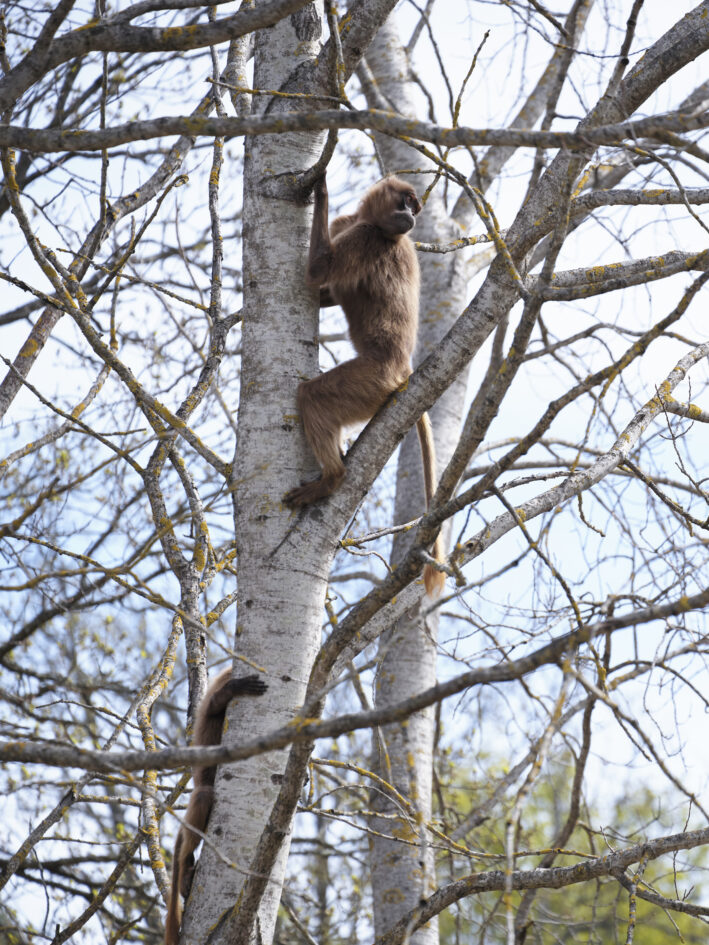
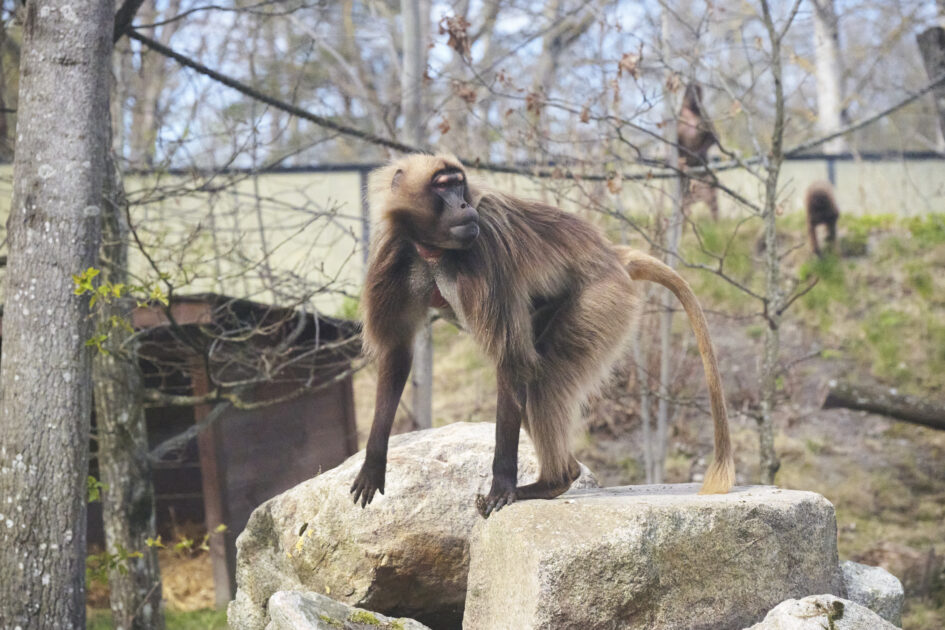
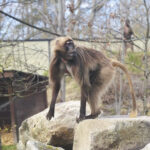
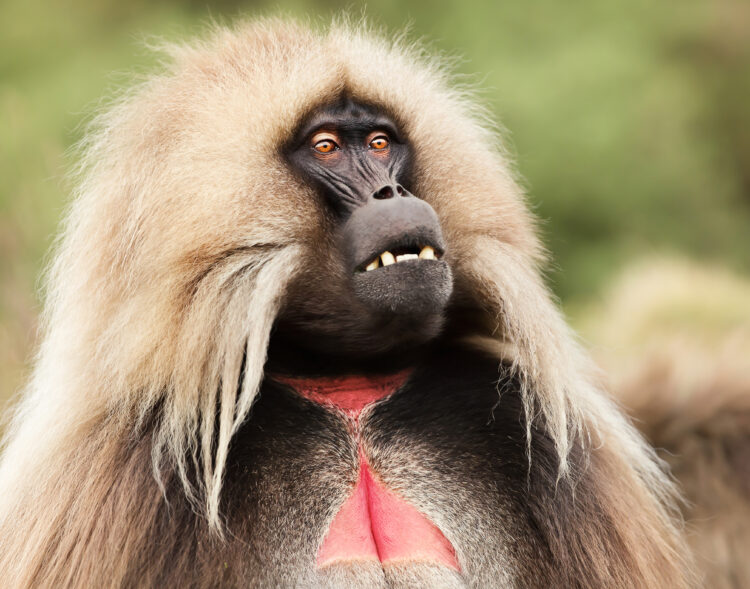
The gelada is a primate sometimes called the ”bleeding-heart baboon” due to the red, heart-shaped patch on its chest. This red patch is an area of bare skin used to display status within the group, among other things. The colour of the chest also changes in females depending on whether they are in heat, pregnant, or nursing their young. Unlike other primates, the gelada is not particularly skilled at climbing and spends much of its time on the ground in large groups, grazing on grass together. They are particularly adapted to living high up in the mountains and use small protruding rock ledges to escape predators. They live in so-called harems, which usually consist of one male along with closely related females and their offspring. In some cases, the group can comprise over 500 individuals living together. The gelada's diet consists mainly of grass, with the remainder made up of fruit, leaves, flowers, insects, and small mammals. Park Zoo participates in the European Endangered species Programme (EEP) for species conservation.
CITES II
The facts
| Scientific name | Gelada |
| Size | 50-70 cm excluding tail |
| Weight | 12-30 kg |
| Food | Grass, fruit, insects |
| Gestation period | 5-6 months |
| Number of cubs | 1 pc |
| Lifespan | about 30 years |
| Living environment | Grassland, mountainous areas |
| Distribution | East Africa, Ethiopia |
| Way of life | Group living |
Taxonomy
| Class | Mammals (Mammalia) |
| Organisation | Primates (Primates) |
| Family | Old world monkeys (Cercopithecidae) |
| Type | Gelada (Theropithecus gelada) |