Fishing cat – Newly moved in
Asian animals
Felines
Predators
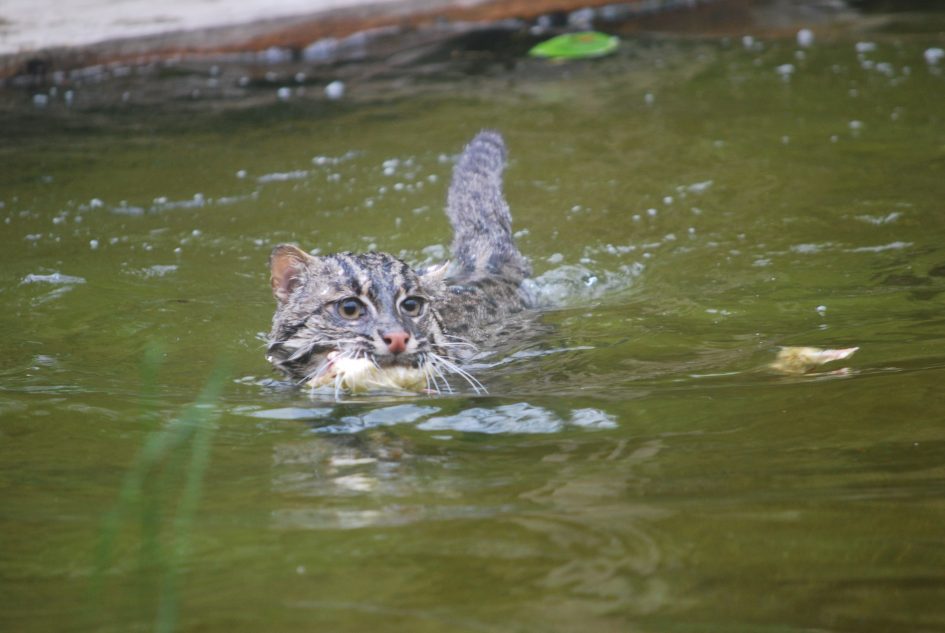
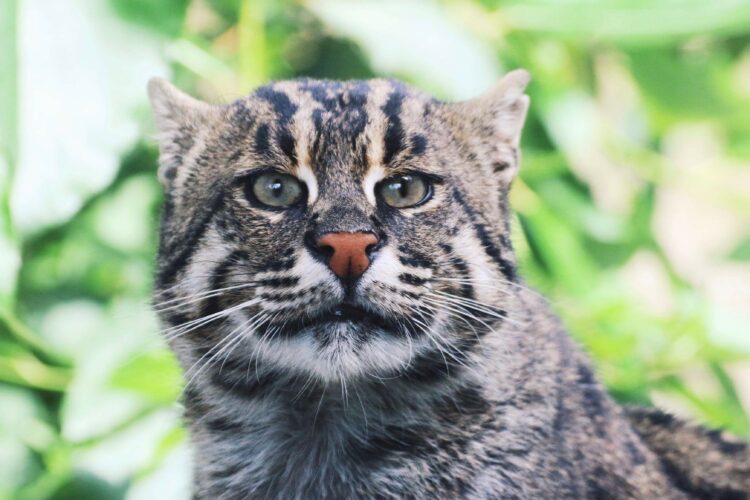
The fishing cat happily throws itself into the water and catches its prey – and as the name suggests, it lives mainly on fish. They are excellent swimmers, having to some extent webbing between their toes on their front paws, which also makes it easier to hold onto slippery prey. When hunting, they sneak up on their prey at the water's edge and have their whiskers pointed forward and submerged in the water to sense movement from fish. They can also dive underwater to catch their prey.
In recent years, the number of fishing cats in the wild has fallen dramatically. Once a common sight, the species has now declined so much that researchers are unable to capture them on camera using so-called ”camera traps”, which automatically photograph passing animals. We therefore do not know today how many fishing cats actually remain in the wild. The destruction of mangrove forests and wetlands in Asia is causing major problems for many animals. It is believed that around 50,000 have disappeared over the last 20 years. We can help save these animals by, for example, stopping the import and consumption of giant prawns, as their farming is a major contributing factor to the exploitation of mangrove forests. Parken Zoo participates in the European Endangered Species Programme (EEP) to conserve the species.
CITES B
The facts
| Scientific name | Fishing cat |
| Size | 65–85 cm |
| Weight | 6–12 kg |
| Food | Fish, crustaceans, frogs, snakes, birds, small mammals |
| Gestation period | 63 days |
| Number of cubs | 1-4 per pack |
| Lifespan | about 15 years |
| Living environment | Forest adjacent to water, wetlands, mangrove swamp |
| Distribution | Small scattered areas in South and Southeast Asia |
| Way of life | People living alone |
Taxonomy
| Class | Mammals (Mammalia) |
| Organisation | Predators (Carnivora) |
| Family | Felines (Felidae) |
| Type | Fishing cat (Prionailurus viverrinus) |