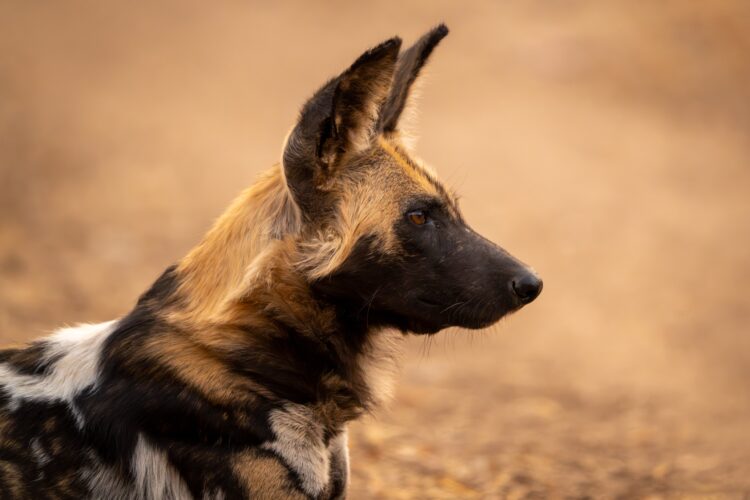
African wild dog - New arrival
African animals
Canidae
The African wild dog, also known as the painted hunting dog, lives in packs with a clear social structure. The pack usually consists of 6–20 individuals with a dominant female and a dominant male, and there are typically more males than females in a pack. As the pack hunts together, they can bring down prey that weighs several times more than they do, and they mostly hunt various antelopes. African wild dogs are very tenacious and often chase their prey over long distances during a hunt. African wild dogs have an unusual repertoire of vocalisations that can best be described as chirps, yelps, whines, barks, and growls. The biggest threats to the species are habitat destruction and fragmentation, and a lack of prey. Conflicts with humans and diseases transmitted from domestic dogs are also a problem in some areas. CITES B.
The facts
| Scientific name | African wild dog |
| Size | 85-141 cm |
| Weight | 18-36 kg |
| Food | Antelopes |
| Gestation period | 73 days |
| Number of cubs | 10-11 each |
| Lifespan | 10-12 years |
| Living environment | Savannas and open woodlands |
| Distribution | Southern and Eastern Africa |
| Way of life | Group living |
Taxonomy
| Class | Mammals (Mammalia) |
| Organisation | Predators (Carnivora) |
| Family | Canids (Canidae) |
| Type | African wild dog |
